In the banking industry, even a few minutes of unexpected downtime can disrupt thousands of transactions, affect customer confidence, and create significant operational and financial challenges.
Banks operate in an environment where customers expect continuous access to essential financial services. Whether they are transferring money, withdrawing cash from ATMs, making online payments, or accessing mobile banking
Running a Large Language Model (LLM) efficiently involves much more than simply deploying it on a powerful GPU. Behind every AI-generated response is a complex process that determines how quickly the model responds, how efficiently it uses computing resources, and how well it handles multiple requests.
As enterprises increasingly adopt AI-powered applications, understanding how AI inference
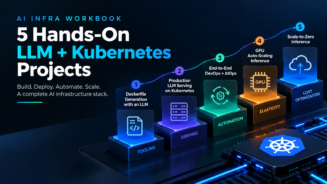
Building and running Large Language Model (LLM) applications in production involves much more than deploying a model and connecting it to an API. As AI workloads grow, engineers must find ways to manage GPU resources, automate deployments, handle changing traffic demands, and keep infrastructure costs under control.
This is where Kubernetes becomes valuable.
Kubernetes provides a flexible
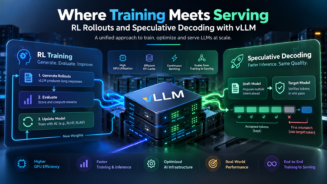
Running Large Language Models (LLMs) efficiently is becoming increasingly important as organizations develop more advanced AI applications. However, achieving faster response times, higher throughput, and better GPU utilization isn't always straightforward.
As models grow larger and workloads become more demanding, AI engineers must find ways to improve inference performance without significantly increasing infrastructure costs.
This is where
Running Large Language Models (LLMs) efficiently is one of the biggest challenges facing organizations building AI-powered applications.
As language models become larger and more capable, they also require significant GPU memory, computing power, and infrastructure resources. While powerful GPUs can help improve performance, continuously adding more hardware is not always practical or cost-effective.
So, how can organizations
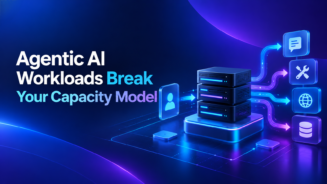
Enterprise AI is moving beyond simple chatbots that respond to individual questions.
Today, organizations are developing AI agents that can perform multiple tasks, interact with external tools, analyze information, and make decisions across complex workflows.
Unlike traditional LLM applications, which often process a prompt and generate a response, agentic AI systems may perform several rounds of reasoning,
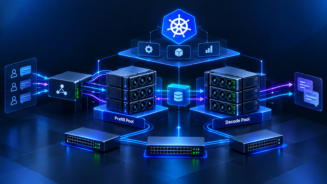
Running Large Language Models (LLMs) in production is becoming increasingly challenging as AI applications grow in size, complexity, and demand.
While a single GPU server may be sufficient for smaller models or limited workloads, enterprise AI applications often require significantly more computing power, memory, and network capacity.
As organizations deploy larger models and support more concurrent users,
Running Large Language Models (LLMs) efficiently is becoming a major priority for organizations building enterprise AI applications.
As AI adoption grows, businesses need infrastructure that can deliver fast responses, handle increasing workloads, and keep operating costs under control.
However, choosing the right hardware for LLM inference is no longer as simple as selecting the most powerful GPU.
Today,
Running a Large Language Model (LLM) in production involves much more than loading a model onto a GPU and generating responses.
As AI applications become more popular, organizations need inference systems that can handle thousands of requests, deliver fast responses, and make efficient use of expensive GPU resources.
However, achieving high performance is not always straightforward.
Even when
Discover how to architect, deploy, and operate a secure, scalable sovereign LLM inference platform using Kubernetes, NVIDIA H200 GPUs, vLLM, NVIDIA NIM, LiteLLM, and F5. Explore enterprise AI infrastructure design, GPU resource management, high-performance model serving, intelligent API routing, load balancing, and Zero Trust security. Learn how organizations can maintain control over sensitive data, optimize